


Introduction
Artificial Intelligence has evolved faster than any technology we’ve seen. We started with chatbots, moved to sophisticated LLMs, and now we hear two buzzing terms everywhere: AI Agents and Agentic AI.
At first glance, they sound similar – like cousins in the same tech family.
But in reality, the difference is bigger than “Cool AI” vs “Cooler AI”.
Understanding that difference is essential, especially if you’re building modern AI systems or future-proofing your skills.
So let’s break it down.
What is an AI Agent?
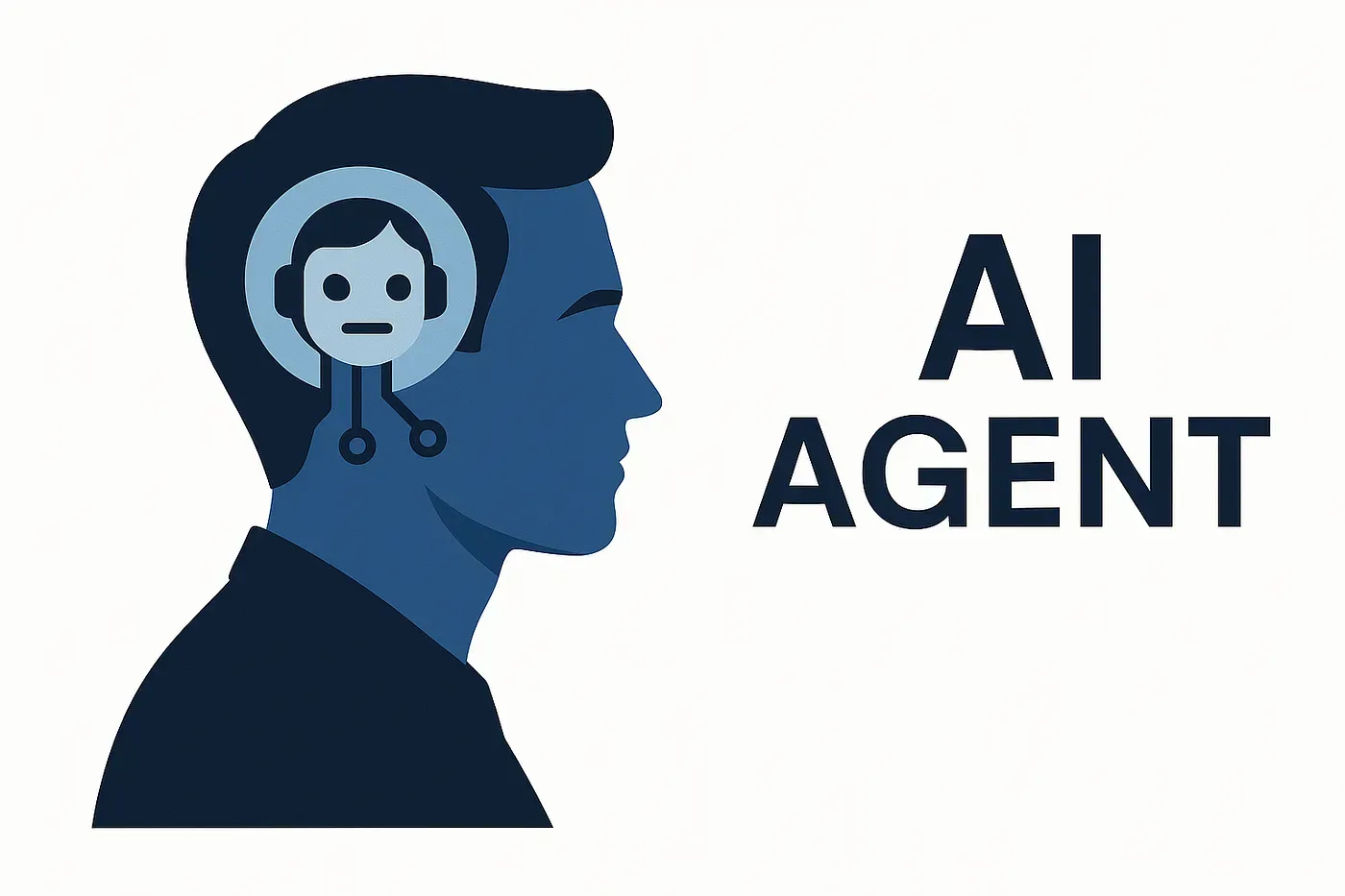
Think of an AI Agent as a goal-driven software assistant that uses AI to complete tasks.
It receives instructions, plans a response, and executes actions.
Key Characteristics
- Works on defined tasks
- Takes commands and executes them
- Limited autonomy – often needs human approval
- Follows predefined workflows or steps
Example
You tell an AI agent:
“Summarize this PDF and send key points to my email.”
It will:
- Read the PDF
- Generate a summary
- Email you the key points
- Stop when done
Useful, powerful – but still instruction-following.
What is Agentic AI?
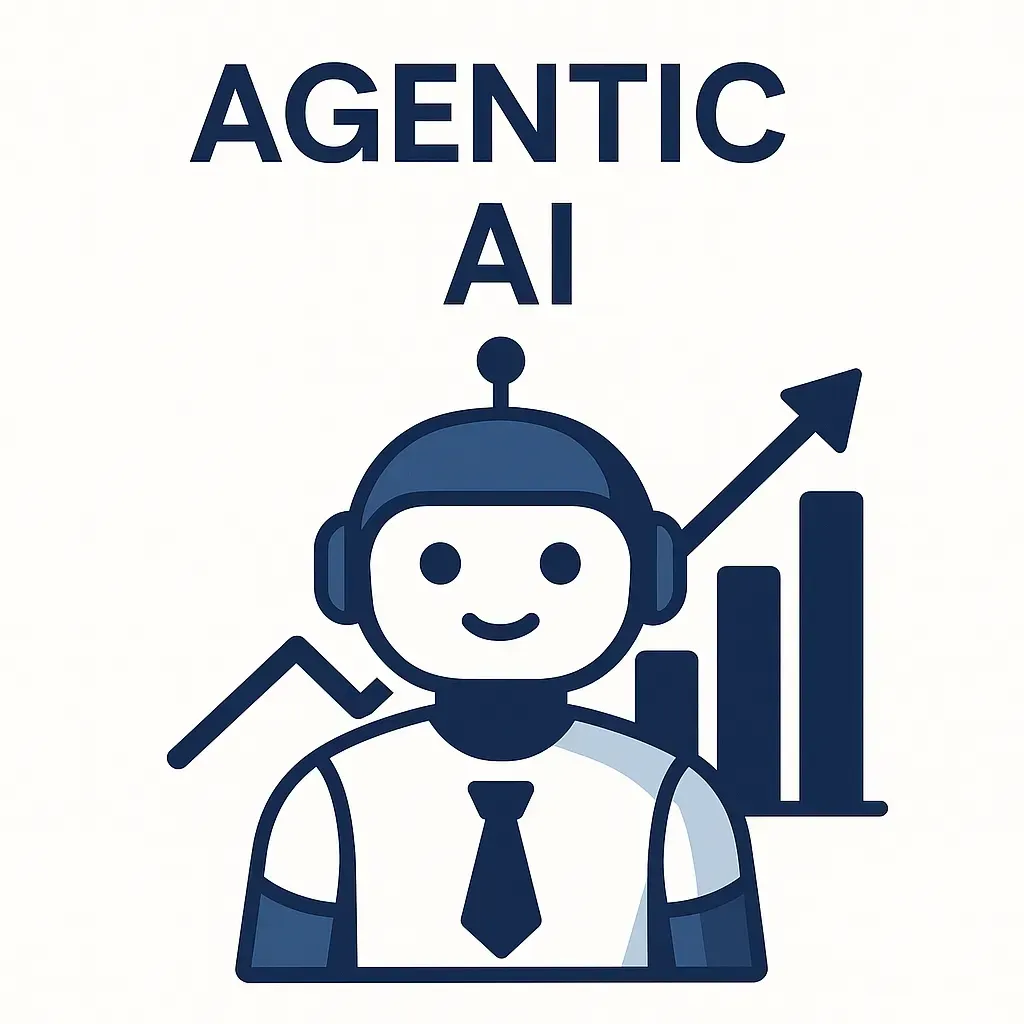
Agentic AI takes this to the next level.
It doesn’t just execute tasks – it self-initiates, self-optimizes, and self-decides how to achieve a goal.
It doesn’t simply respond.
It acts, learns, adapts, and improves over time.
Key Characteristics
- Works toward goals, not just tasks
- High autonomic decision-making
- Learns from environment and experience
- Can break goals into sub-goals
- Can collaborate with other agents
Example
You say:
“Improve my product’s email conversions.”
Agentic AI will:
- Analyze past campaigns
- Identify what worked and what didn’t
- Generate and A/B test multiple email versions
- Track metrics
- Iterate automatically
- Roll out the best-performing strategy
No human micromanagement.
In Simple Words

Real-World Examples
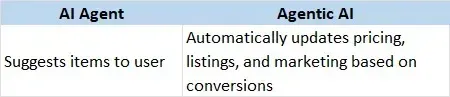
📈 Stock Investing

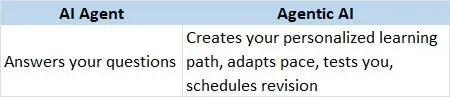
🎓 Learning
🎯 Why This Matters
The shift from AI Agents → Agentic AI mirrors evolution in human workplace roles:
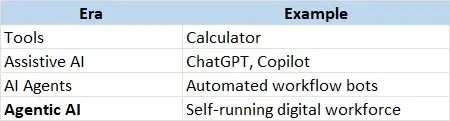
Tomorrow’s organizations won’t just automate tasks —
They will automate entire roles.
And those who design, monitor, and orchestrate Agentic AI will lead the future.
Final Thought
We are moving from: “AI that helps humans do work” to “AI that works along with humans — and eventually works itself.”
The winners of this revolution will not be those who fear it, but those who learn to collaborate with it.
The real question isn’t: Will AI replace humans?
It’s: Who will master Agentic AI — and who will be managed by it
