



Have you noticed anything in common with the most frequently used apps on your mobile?
Besides boasting a powerful algorithm that keeps you hooked, most of these apps have a beautiful user interface and a pleasant user experience as well. The inference is that whether it’s an enterprise solution or a consumer-facing one, having a bad UI/UX design is non-acceptable for today’s user.
Although UX design lies at the intersection of art and science, following some fundamental good practices can make a significant difference. One such factor is following user persona-based design and development practices.
User Persona
User personas are archetypical users whose goals and characteristics represent the needs of a larger group of users.
In short, a user persona is someone representing your target user base. Conducting a user persona study includes gaining a good understanding of the user’s background, profession, interests, frustrations, needs, aspirations, work environment, and any other detail which helps you know your user better. User persona study is the KYC of the software product development world.
Following user persona-based design and development practices can be a game changer. Over our years of experience building software solutions, we have had our share of experiences to validate this.
Experience 1: (Not so) Broken Buttons Don’t Lie – How We Learned from Our Design Mistakes
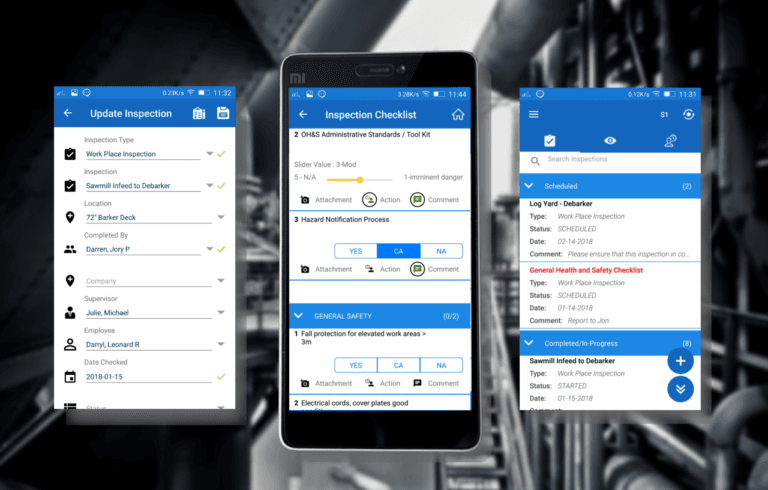
We have an ongoing Canadian customer in the Employee Health & Safety (EHS) domain. As their technology partner, we had enhanced a legacy solution and built a mobile app.
One day, the customer reached out to us with a rather peculiar issue – the buttons in the mobile app we built aren’t working. We were surprised, as the app was working perfectly fine when we tested it.
To get to the bottom of this problem, we revisited the basics, and the answer was hiding in plain sight.
- The main utility of the app was to enable industrial field workers in North America to record safety-related incidents.
- A typical user was a North American male, often around 6 ft tall.
- User environment included mines or other industrial sites, often with low lighting and visibility and bleak network connectivity.
- Another point to consider was that the app would often be used in harsh/cold weather conditions, meaning that the app would be used with gloves.
The issue was that users wearing thick gloves couldn’t click the desired buttons on the app easily.
Here’s what we did to resolve it:
- User interface engagement points were redesigned considering usage with thick gloves.
- Most small buttons and text were replaced with larger icons and font sizes.
- Screens were redesigned, considering varied demographics such as age and eyesight.
- Major redesigning efforts included adjusting the color palette, font choice, icon design, and choice of buttons (sliders, simple yes/no buttons, pick lists).
- Offline sync capability was developed, considering the usage of the app in areas of bleak connectivity.
This experience taught us that the lack of understanding of the end user can decrease the utility of the solution or worse, render the software useless.
Experience 2: Leveraging User-Persona Study to Stop Revenue Leakage
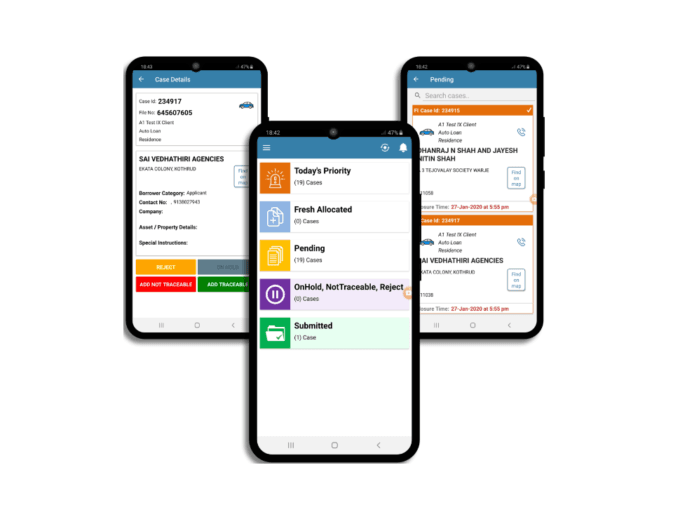
We were approached by a fintech firm serving more than 50% of the Credit Risk assessment market nationwide to revamp their existing web and mobile solutions. Not only were these existing apps inefficient, but they were also causing significant revenue leakage.
Why were users unhappy with the existing solution? User persona study helped us understand more about this dimension:
- A high-school educated field agent spending a typical workday visiting residences of loan applicants to collect and verify data.
- The field-intensive nature of the user’s job meant that the app should be very simple and procedural in nature.
- End user interviews revealed that users found the existing app difficult to use.
Considering the findings of the user persona study, here’s how we revamped the solution:
- Significantly reduced (or eliminated) typing for field users by implementing easy-to-use features like pick lists, yes/no options, and select buttons.
- The application workflow was redesigned to organize data collection logically, reducing unnecessary efforts and time wastage for the users (field agents).
This overhaul brought in a significant improvement in user acceptance, making all the difference.
Experience 3: No Gain Without Eliminating the Pain
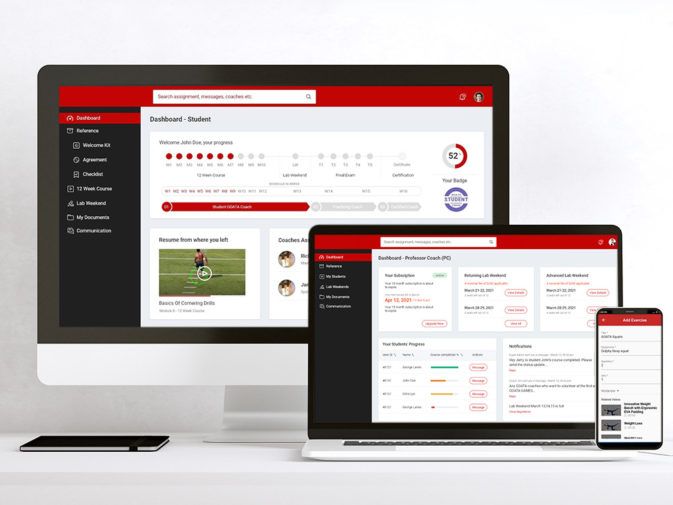
Competitive sports require professional training. Delivering such world-class fitness training is a challenge when the student and coach are not co-located. A renowned coach based in the US wanted to build a software solution to coach online and allow athletes and coaches to track the entire fitness journey seamlessly.
A user-persona-centric approach was adopted to convert the vision into reality. We leveraged techniques like user interviews, user persona building, empathy mapping, journey mapping, and defining an information architecture to know more about the prospective users. This gave us insight into the user/client’s intent and pain points, allowing us to design, architect, and build a solution addressing the end-to-end needs of online fitness coaching.
How we addressed the identified pain points:
- Built an all-inclusive training platform to eliminate the need for multiple platforms to disseminate online training, send invitations, and collect fees.
- Conducted a user persona study of students to understand their challenges of having to travel long distances to attend coaching sessions.
- The solution included a communication interface to address concerns of not being able to communicate or stay in touch with coaches.
The purpose of any solution should be to address and eliminate the primary pain areas of users. There could be many pain areas, but we must identify the ones that are of prime importance — which, if solved, gives maximum leverage.
Conclusion
What we have learned from instances like these over the years is that-Without studying a business and end users, their way of working, and their priorities, challenges, and pain areas it is not possible to design a good solution.
We have observed, with such practices, we were able to
- Increase User Engagement & Retention
- Increase user acceptance
- Increase customer satisfaction
- Humanize your solution/Add a human touch to your application
At IncubXperts, our endeavor remains to build business intent-driven, user-centric solutions which will attempt to make the end user’s life easier! Backed by an in-house team of UX experts, IncubXperts ensures that we have all the best tools in our arsenal to deliver impeccable user experiences.
