


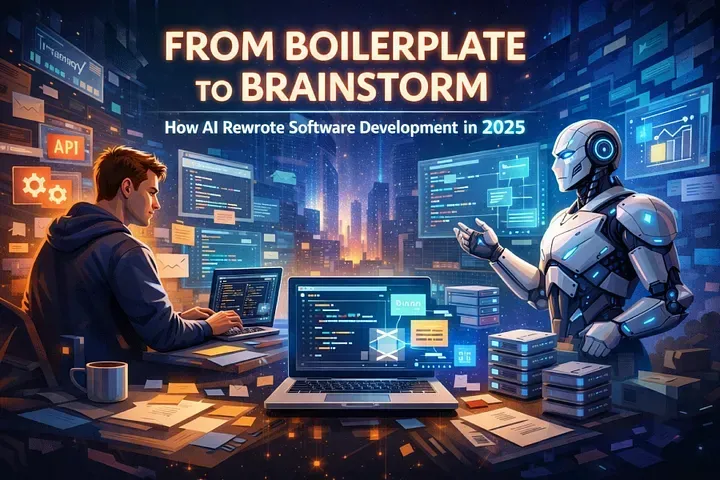
We didn’t wake up one day and decide to stop writing boilerplate code.
We just… stopped needing to.
January 2025: “AI Is Just Another Hype Cycle”
At the beginning of 2025, most developers were cautiously optimistic – and slightly skeptical.
AI could:
- Autocomplete code
- Generate snippets
- Write basic boilerplate
- Occasionally hallucinate with confidence 😅
Our daily workflow still looked familiar:
- Write scaffolding manually
- Debug via logs and breakpoints
- Google errors
- Open Stack Overflow tabs
- Copy, paste, adapt, repeat
AI felt like a helper, not a partner.
The consensus was simple:
"Useful, yes. Revolutionary? Not yet."
December 2025: When AI Moved Inside the IDE
The real shift didn’t happen because AI got smarter.
It happened because AI moved where developers live – inside the IDE.
Tools like:
- Cursor
- Antigravity
- AI-augmented VS Code / JetBrains forks
did something subtle but powerful:
They turned the IDE from a code editor into a thinking environment.
This was the inflection point.
AI-Native IDEs: Not Autocomplete, But Intent Understanding
Traditional IDEs:
- Helped write code
- Highlighted errors
- Offered refactors
AI-native IDEs in 2025:
- Understand intent
- Modify entire codebases
- Explain why a change is needed
- Refactor across files, layers, and services
- Catch bugs before you run the app
Example in Cursor:
"Refactor this legacy payment module to support idempotency and retries."
What happens next isn’t magic – it’s contextual reasoning:
- Identifies risky flows
- Updates interfaces
- Adjusts tests
- Flags edge cases
- Explains trade-offs
That’s not autocomplete.
That’s collaborative engineering.
The Silent Death of Boilerplate
In early 2025, we still:
- Created controllers
- Wired services
- Wrote DTO mappings
- Added validations manually
By the end of 2025, AI-first IDEs made boilerplate economically irrational.
Now the prompt looks like:
"Create a secure expense reimbursement flow with monthly limits, audit logs, and role-based access."
The IDE:
- Designs the API
- Generates models
- Adds validation
- Suggests authorization checks
- Produces test cases
Developers didn’t get lazy.
They got strategic.
Stack Overflow Isn’t Dead – But It’s No Longer First
Let’s be honest.
Stack Overflow isn’t obsolete —
the workflow is.
Instead of:
- Searching generic questions
- Matching similar but not identical problems
We now:
- Ask questions specific to our codebase
- Get answers contextualized to our stack
- See trade-offs explained, not just solutions
Stack Overflow trained us.
AI learned from us.
And now it teaches back – instantly.
Debugging: From Stack Traces to Explanations
Debugging used to be:
- Error appears
- Copy stack trace
- Search online
- Read 10 answers
- Try fixes blindly
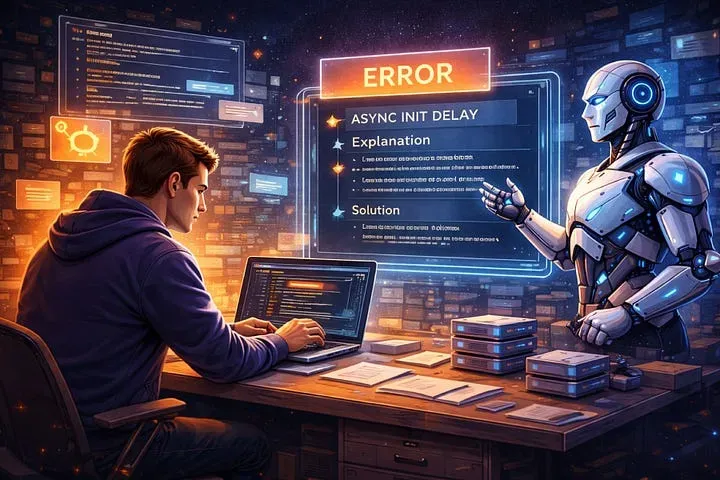
In 2025, with AI-powered IDEs:
- You highlight the error
- Ask why
- Get a root cause tied to your code
- See both the fix and the prevention
Stack Overflow didn’t die —
contextless debugging did.
Instead of:
"Here’s a generic fix"
You get:
"This fails because your async initialization races with request handling. Here’s the safest fix and why."
That’s a massive leap in developer confidence.
Developers Didn’t Lose Control – They Gained Leverage
A common fear was:
"AI will replace developers."
Reality in 2025:
- Junior developers ramp up faster
- Senior developers focus on architecture
- Tech leads think in systems, not syntax
- Code reviews focus on design, not formatting
AI IDEs didn’t remove skill —
they amplified it.
Surveys Confirm What We Feel
2025 data supports this shift:
- GitHub Octoverse shows AI tools used daily by most active developers
- Stack Overflow Developer Survey reports AI tools overtaking forums for first-line debugging
- McKinsey Tech Trends notes 30–50% faster delivery with AI-assisted development
Explore:
The industry didn’t talk itself into this change.
It measured it.
Where This Is Heading Next
If 2025 was about AI inside the IDE, the future looks like:
- Agentic IDEs that plan multi-step changes
- AI that runs tests, fixes failures, and retries
- Natural language → production pipelines
- IDEs that challenge your design choices
- AI as a peer reviewer, not a tool
The best engineers won’t be those who type fastest.
They’ll be the ones who:
- Ask the best questions
- Set the right constraints
- Make the final calls
Conclusion
AI's journey in 2025 mirrors that of many foundational technologies before it. What began as a trend is quickly becoming an invisible but essential part of the software development stack. The question is no longer whether AI will be used in development—it's becoming a standard part of how modern software is built.
