


Statistics on consumer mobile usage and adoption are clear: users consume twice the amount of content on mobile than they do on desktops, creating an exciting opportunity for businesses to generate engagement and improve customer experience. As a result, businesses no longer question whether they should target mobile users. Instead, they spend time wondering the best way to do it.
For a long time, businesses had only two choices when it came to mobile app development: stay only on the web or develop a native app. Now, they have a third choice: Progressive Web Apps (PWAs). Promising easy and affordable app building without many downsides, PWAs are often hailed as the best way to establish a mobile presence, but are they really as great as they seem to be? Let us find out in this Progressive Web App vs native app comparison.
Mobile Usage Trends
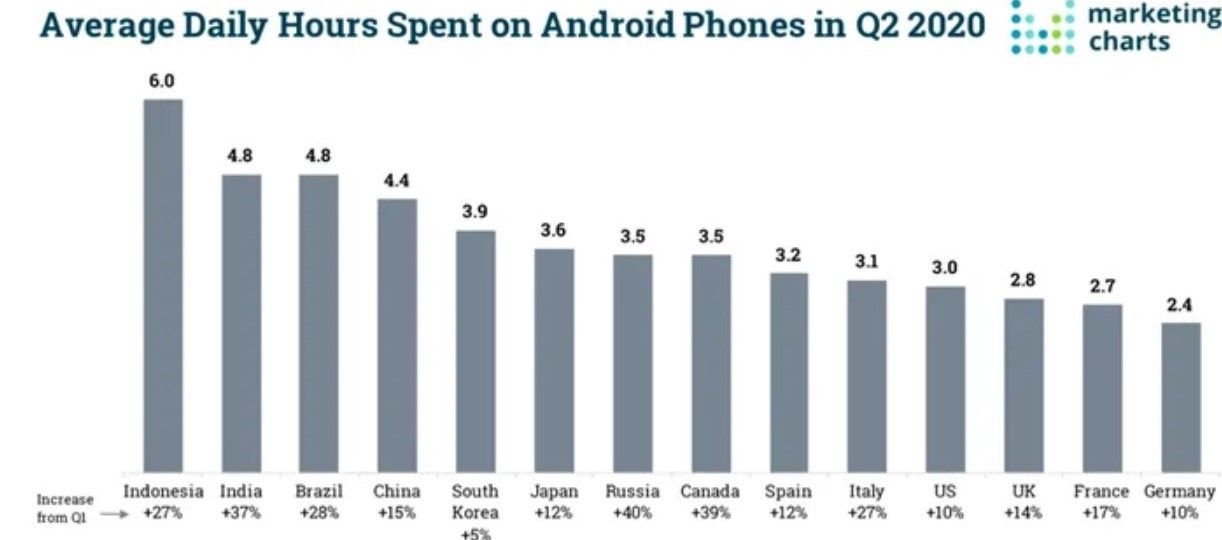
Users are spending more time on their mobiles than ever. Ericsson Mobility Report predicts a 25% increase in mobile traffic by 2025. Also, the average person is spending more time on their phone than before.
With more attention on mobile, users love businesses that have mobile apps and promise a great experience on mobile. Native apps offer an amazing end-user experience — better mobile UX and greater features, but PWAs help you ship faster, keep costs under control, and reach out to users on multiple platforms.
What should be your mobile app development plan? Should you have a progressive web app or stick to a native app? Let’s compare PWAs and native apps to see what’s best for your business growth and what your users prefer.
What is a Progressive Web Application?
A progressive web application, abbreviated as PWA, is not a typical app in the conventional sense. It is an app-imitating website designed and optimized to perform like a mobile application. In other words, PWAs are more user-friendly than traditional web pages, but you don’t need to download them from app stores. It’s enough to find them through browsers and use them right away.
A good example of PWAs in action is the Spotify or Starbucks websites, which provide a native app-like experience without requiring a download.
What is a Native Application?
The term native app speaks for itself, as it is natively developed to run on a specific platform, iOS or Android or both through cross-platform technologies, ensuring outstanding adaptability and great user experience. Native apps are not reusable across platforms – a separate version is required for each platform. Examples include a calculator or a weather app originally installed on your device.
PWA vs Native App – A Business Perspective
Here are some pointers to help you choose between developing a PWA or a native app:
1. Time to Market
If you’re still early and want to ship quickly, PWAs may be the right choice for you.
- Native apps require separate development for Android and iOS, increasing time to market.
- Progressive web apps are faster to build and launch as they are essentially web apps that function like mobile apps.
PWAs eliminate the app store approval process, enabling businesses to ship faster.
2. Cost of Development
Native apps are costlier to build due to separate codebases for Android and iOS.
- Developing in Java or Kotlin for Android and Objective-C or Swift for iOS increases costs.
- PWAs are less expensive as they are built using a single codebase and function on any platform.
This makes PWAs a better choice for startups looking to minimize expenses and test the market quickly.
3. Cross-platform Availability
If your audience is divided between Android and iOS, going native means building two separate apps.
- PWAs are designed to be responsive and accessible across all platforms, enabling businesses to reach more users faster.
Examples of Successful PWA Adoption:
- Hulu: 27% increase in returning visitors
- Nikkei: 3x increase in organic traffic
- Forbes: 100% increase in engagement rates
PWA vs Native Apps – A User Perspective

Download & Installation
Mobile users love simple workflows and ease of use.
- PWAs: No download required; users can access the app directly via a browser.
- Native Apps: Require download and installation from app stores, consuming device storage.
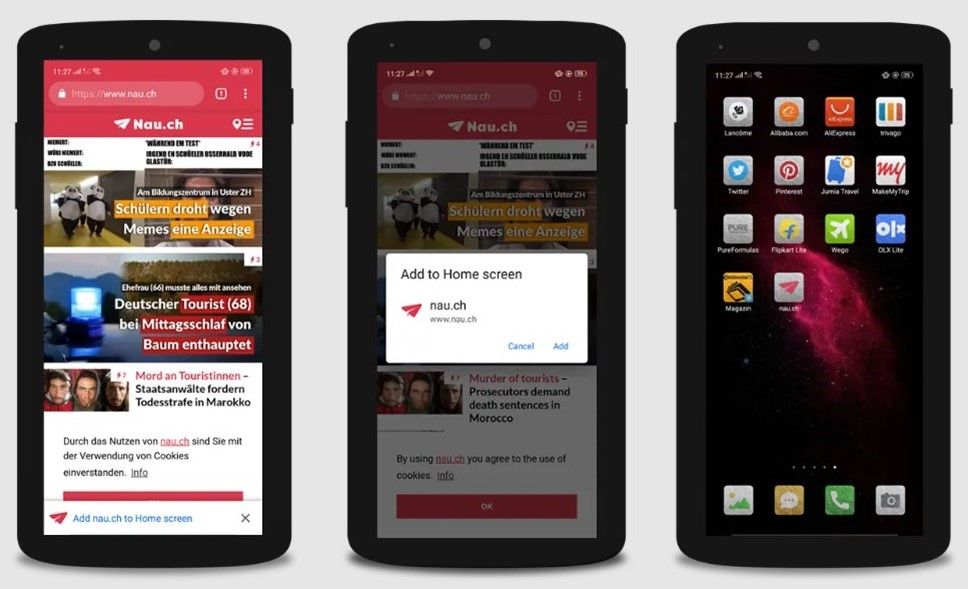
A good example is Nau, a Swiss News website, which saw a 400x increase in users within two days of launching its PWA.
Performance
PWAs run through third-party browsers, potentially leading to latency and battery consumption.
- Native apps integrate seamlessly with the device, offering a smoother and faster user experience.
Features & Functionalities
Native apps can leverage advanced features like geofencing, mobile payments via NFC, and smart sensor usage, which are not as accessible through PWAs.
- PWAs are limited in terms of accessing native features, especially on iOS where push notifications are not supported.
Offline Availability
PWAs offer limited offline functionality, caching certain parts of the web app.
- Native apps provide a more consistent offline experience, maintaining data and functionality even without internet connectivity.
Which One Should You Choose?
Choosing between PWAs and native apps depends on your business goals, budget, and user needs.
- If quick market entry, lower costs, and cross-platform reach are your top priorities, PWAs may be the better choice.
- If enhanced user experience, complex functionalities, and offline capabilities are crucial, then investing in native apps is advisable.
Conclusion
PWA or Native App: What Will You Choose?
The decision about progressive web apps or native apps should be taken based on the goals of your app. To make it easier, we’ve highlighted a few general goals and the most valid choice in these scenarios as an entrepreneur.
By contrasting PWA vs Native app features, this section outlines your app development goals for the best results when choosing between a PWA or a Native App. This way, you’ll know exactly what you need to do to update your company’s operations.
When to Choose PWA?
- If your business requires a user-friendly app.
- If you’re on a tight budget.
- If you intend to build and launch apps more quickly.
- To reach more users.
- To use with compact. devices like smartphones and tablets.
- Waste less time waiting for app store approval before going live.
When to Choose a Native App?
- To create a long-lasting and credible brand identity.
- Publishing apps on leading app stores are more reliable.
- To incorporate feature-rich functions like geofencing or sensor detection.
- To let iOS users receive push notifications.
- To offer users increased security.
- Hope this article will help you decide between PWA and Native apps.
Thank You! Keep Coding!
