



The Importance of Design Discovery in Software Development
Various industries have experienced product failures, causing both small problems and significant financial losses. These failures have had a lasting impact. Mistakes in designing products can be very costly, ranging from spending thousands to billions of dollars on fixing issues. Some products never even make it to the market.
An example of a big problem caused by a small mistake is the Y2K issue. The mistake of using 'mm/dd/yy' instead of 'mm/dd/yyyy' for dates had huge consequences. It led to a global effort to fix the problem, costing billions of dollars, and taking over a year. This situation showed how important it is to be careful, thoughtful, and thorough during the design process.
Avoidable Failures
In product development history, there are many cases where problems could have been avoided if there had been more careful discussions during the design stage. These situations emphasize the importance of having detailed discussions and careful examination before deciding on any design.
Business Challenges
In today's fast-paced software development world, it is crucial to be agile and get products to the market quickly. However, not having a strong and detailed design process can cause many problems, potentially making the development cycle less efficient and successful.
- Delayed development cycles
- Customer escalations
- Increased Rework and Technical Debt
- Lack of Clarity and Vision causing Low team Morale and Confidence
- Reduced Scalability and Adaptability
About Design Discovery Process
While in the midst of developing an application or a feature, it is important to adapt to what customers need. Updating and designing new features is a team effort that aims to smoothly add new functions to what we already have. This helps make sure we stay successful.
Key Aspects of Design Discovery Process
Interviews:
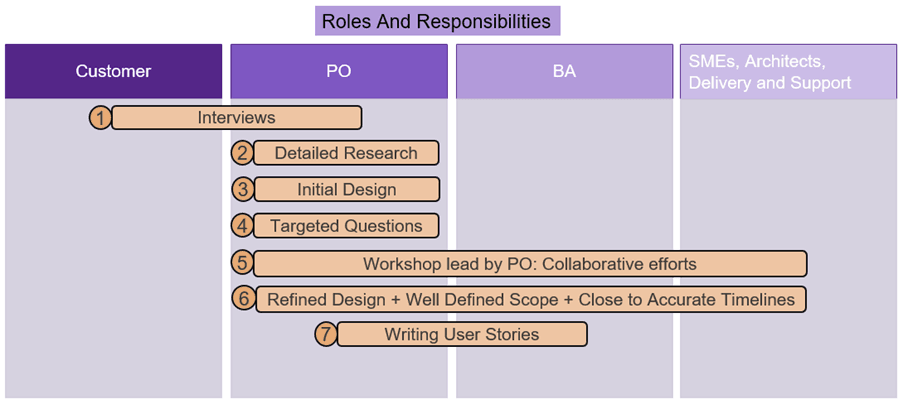
Interviewing the users who raised the requirements is important to make sure we understand the requirements well. They help gather detailed information about what is needed, find out if there are any current solutions, and understand how urgently the new features are needed.
Brainstorming and Collaboration:
Next in the process is when the team gets together to share ideas. This helps make sure we think about things from different viewpoints, encouraging creativity and innovation when working on the new requirements.
Thorough Questioning and Discussion:
The team, which includes the Product Owner, Business Analysts, Subject Matter Experts, Software Architects, Support Staff, Developers, and QA Engineers, discusses questions to understand the details of the new requirements. They work together to clear up any uncertainties, identify issues, and make sure everyone understands what is needed.
Documentation of Impact Areas:
A crucial step is figuring out and writing down how the suggested changes will affect various parts. This includes a comprehensive exploration of potential effects on various areas such as:
- User Interface (UI)
- Database
- Decision Making processes
- Configuration settings
- Authentication and Authorization protocols
- Performance considerations
- Error Handling mechanisms
Tools
In the current way of discovering and creating designs, using tools that help everyone work together has become important. Platforms such as Mural provide a dynamic digital space where all participants can contribute seamlessly during brainstorming sessions.
Adhering to Key Result Areas (KRAs) in Design Approach
During the collaborative process of brainstorming and comprehensive discussions, it is crucial that the design approach aligns with specific Key Result Areas (KRAs). These benchmarks ensure that the resulting design is not only innovative but also aligns with broader organizational objectives.
-
User-Centricity:
The design approach should demonstrate a deep understanding of user personas, creating an experience that is easy to understand, easy to use, and friendly for everyone. -
Alignment with Business Objectives:
Each design decision should be scrutinized for its direct impact on business outcomes, ensuring a symbiotic relationship between design efforts and organizational objectives. -
Scalability and Flexibility:
Assess the scalability of the design to ensure it can grow seamlessly with evolving requirements without compromising performance or user experience. -
Customizable:
Enable users to personalize the software according to their specific requirements and preferences. -
Configurable:
Provide a range of configurable settings and options that users or administrators can modify. -
Efficiency in Implementation:
Evaluate the feasibility of implementing the design within established timelines and resource constraints, avoiding unnecessary complexity. -
Consistency Across Platforms:
Ensure a consistent design language across various platforms and devices. -
Technological Feasibility:
Assess the feasibility of implementing the design within the existing technological infrastructure, avoiding solutions that may lead to technical debt. -
Innovation and Creativity:
Encourage innovative and creative solutions to design challenges. -
Cross-Functional Collaboration:
Check if everyone is included in the design process. Ensure that ideas from different teams, like developers, marketers, and end-users, are included. -
Compliance and Security:
Ensure that the design adheres to industry standards and security protocols. -
Accessibility:
Prioritize accessibility, ensuring that software is usable by all individuals, regardless of their abilities or disabilities. -
Auditability:
Create systems and processes that enable transparent tracking, analysis, and validation of actions and decisions within the software. -
Maximizing Performance:
Performance optimization is integral to delivering a seamless and responsive user experience. A well-designed software system not only meets functional requirements but also operates efficiently, providing users with fast response times and smooth interactions.
By focusing on these KRAs, teams can ensure that their design process is structured, collaborative, and aligned with both business objectives and user expectations.
Conclusion
The design discovery process is like a compass that shows the way for successful and meaningful software development. It involves careful exploration, producing ideas, and working together. Design discovery is crucial for creating new and smart solutions that not only meet but go beyond what users expect.
