

Business Problem
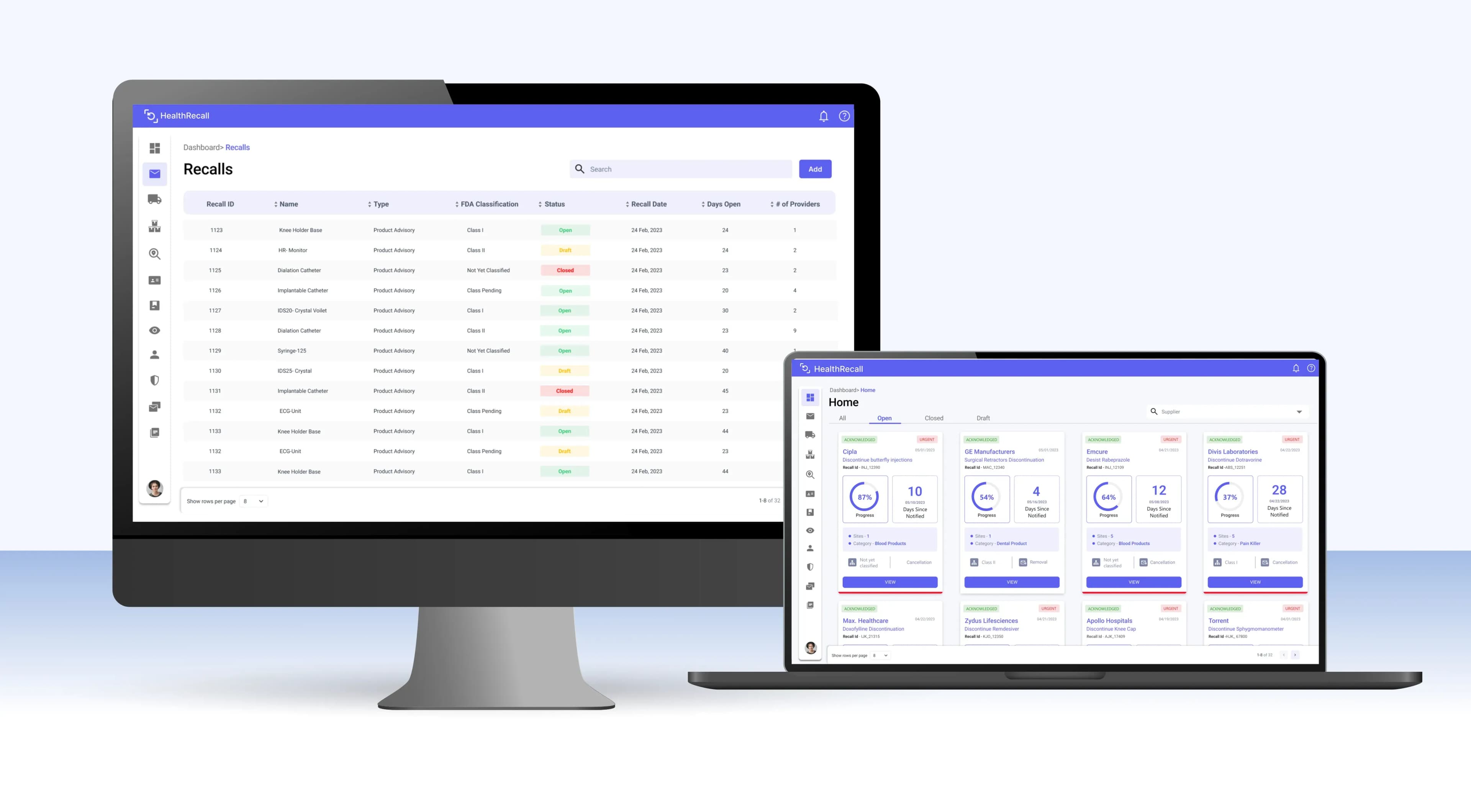
A leader in medical product recall management faced challenges in modernizing their paper-based recall process into a scalable web-based platform. Inefficiencies in communication, delays in managing recall actions, and risks to patient safety underscored the need for a robust solution. The platform required validation for large-scale data handling, stakeholder-specific functionalities, and seamless performance under real-world conditions to meet regulatory and operational demands.
Technology Solution
A comprehensive QA strategy was implemented to ensure functionality, scalability, and reliability:
- Persistent QA Environment: Pre-configured with realistic data for repeatable tests, simulating workflows for suppliers and providers.
- Volume Testing: Simulated scenarios involving 5,000 supplier locations, 2,400 provider users, and 4,000 affected locations to validate large-scale operations.
- Automated Testing: Built a Selenium-based regression suite to reduce manual testing, speed up updates, and validate stakeholder workflows.
- Workflow Validation: Combined manual and automated testing to ensure seamless stakeholder-specific operations.
Technology Stack
- Automation Tools: Selenium
- Backend: SQL Server for data management
- Cloud: Azure for hosting QA environments
- Frameworks: .NET Core for platform integration
Benefits & Impacts

Accelerated Recall Actions
Improved communication between suppliers and providers streamlined recall processes.
Test Efficiency
Automation reduced regression cycles by 50%, cutting manual testing time significantly.
Scalable Performance
Confirmed the platform could handle thousands of users and locations simultaneously.
Cost Optimization
Preloaded QA environments minimized repetitive setup and reduced infrastructure expenses.
Enhanced Stability
Early issue detection improved platform reliability and usability.
Stakeholder Confidence
Validated workflows bolstered trust and satisfaction across all user groups.
TRUSTIMONIALS
Success Delivered, Trust Earned

Some of our initial job specifications couldn't be achieved in the manner we assumed would work. IncubXperts identified these issues and provided alternative options. The job was completed successfully! I appreciate the lengths they went to ensure the desired outcome was achieved.
Adam C
CEO
A location tracking system for a fleet management solution
The team an excellent job on my license management platform. They delivered on time. I am really happy with the solution.
Amin F
President
A license management solution for a genetic data platform
The team at IncubXperts have exceeded all expectations. They are extremely professional, capable, responsive and timely. We had no complaints and would highly recommend them!
Damar C
Chief Operating Officer
An automotive retail F&I Reporting and Analytics Platform
The IncubXperts team did a great job in helping architect our CRM solution.
Edgar G
Head of Information Technology
A fast-growing airline providing passenger and cargo charter operations
The team exceeded my expectations - they are extremely professional, knowledgeable, communicative. What a great experience all around! I highly recommend them.
G.R. Homa
CEO
A white-labeled online order management suite for restaurants
We have used IncubXperts to complete the development of our proprietary CRM system. Their professionalism, customer service, capability and dedication has been a stark difference. The system they have delivered continues to provide value to our business.
George K
Founder and Managing Director
An award-winning Australian commercial finance broker
This team is so collaborative and knowledgeable! They possess a deep level of skills, are flexible and delivered well beyond the project requirements. Would highly recommend!
Kristen P
VP of Product and Strategy
A full-service medical communications company
IncubXperts creatively thought through the project and took development a step further. They designed our app to have a solid structure that can be built up on in the future. They have streamlined our Azure costs while providing an effective solution.
Lisa H
VP of Product Development
A SaaS product with customers like Canada's largest forestry company
They are very easy to work with, honest and professional. I highly recommend you give them any and all of your development projects as these guys know what they are doing. It has been a pleasure.
Michael R
CEO
A US-based Technology company
Your relentless efforts in improving product and your speed of troubleshooting impressed us! Your commitment towards services and speed in troubleshooting is brilliant.
Naren G
Founder
A product used across 30 cities with a volunteer network greater than 700
An amazing job well done! This was a complicated project and was understood and handled perfectly.
Nick R
Software Engineer
A law enforcement software platform
Great communication and problem solving. I had a great experience working with them. It was a small project, but they took the time to document my request, carefully outline and explain the requirements and tools needed to be successful. I highly recommend them.
Noemi T
Owner
A US based cleaning services company
The project would not have succeeded without this partnership. I was always confident that any task I gave the IncubXperts team would be done well and done quickly.
Prasantha J
Founder
A US-based Healthcare Company
Great ownership and attention to detail. It would be a huge oversight if you are not considering this team for work!
Rimond A
CEO
A North American technology services company
IncubXperts is a world-class technology company that partners with us to deliver our industry-leading fintech products to market and we are so proud of the development work that the team in India is producing. There have been insightful exchanges as we continue to drive our partnership forward.
Satish T
Head of IT and Product
A major North American check and payments processing firm
IncubXperts possess a maturity and focus that far exceeds those of most companies. They have been an indispensable member of our team.
Steve K
CEO
A SaaS product used by 160K users across 100+ countries
This team is by far the most professional I have worked with to date. They are worth the cost for a smooth and on-time project. I have no negatives working with this team. I will use them for all my projects moving forward.
Tim D
Owner
A crowdfunding sports entertainment platform
The IncubXperts team have been fantastic partners and are an incredible development organization. We are incredibly happy with their relationship, work product, and professionalism. If you are looking for a true partner to help with your development needs, look no further.
Paul L
CEO
A eco-conscious smart woodstove manufacturing company
Working with this team has been an exceptional experience. Their ownership and attention to detail ensured seamless communication and project success. Their professionalism, responsiveness, and dedication made the entire process smooth and enjoyable.
Ron A
Founder and Owner
A fintech company dedicated to solutions for the real estate and mortgage industry